PEDESTRIAN WALKWAYS

Safe passage for people

Safe passage for people
Solutions

The Challenge Event venues and construction sites need firm, safe walking surfaces over grass, mud, and uneven ground — but conventional solutions damage turf and take too long to install.

The Solution Lightweight composite mat walkways install rapidly to create stable, slip-resistant pedestrian paths that protect the ground surface beneath.

Key Challenges

What Makes Pedestrian Walkways Demanding

Ground Stability

Event and construction sites need firm, level walking surfaces over grass, mud or uneven terrain.

  • Trip Hazards
  • Wet Ground Sinking

Environmental Protection

High foot traffic concentrates pressure, killing grass and degrading ground in short periods.

  • Turf Damage
  • Ground Compaction

Operational Efficiency

Temporary walkways must install and remove rapidly around event schedules and site programmes.

  • Setup Time
  • Pack-down Delays
Engineered Solutions

Performance Over
Unstable Ground

Deploy rapid access systems that protect the environment while supporting heavy loads.

Trip-Free Surfaces

Seamless interlocking designs eliminate trip hazards for public events and site personnel.

Anti-Slip Profiling

Engineered surface textures provide high traction for pedestrians even in wet and muddy conditions.

High-Volume Hubs

Supports massive footfall without degradation to the mat or the underlying grass/soil.

Rapid Bump-In/Out

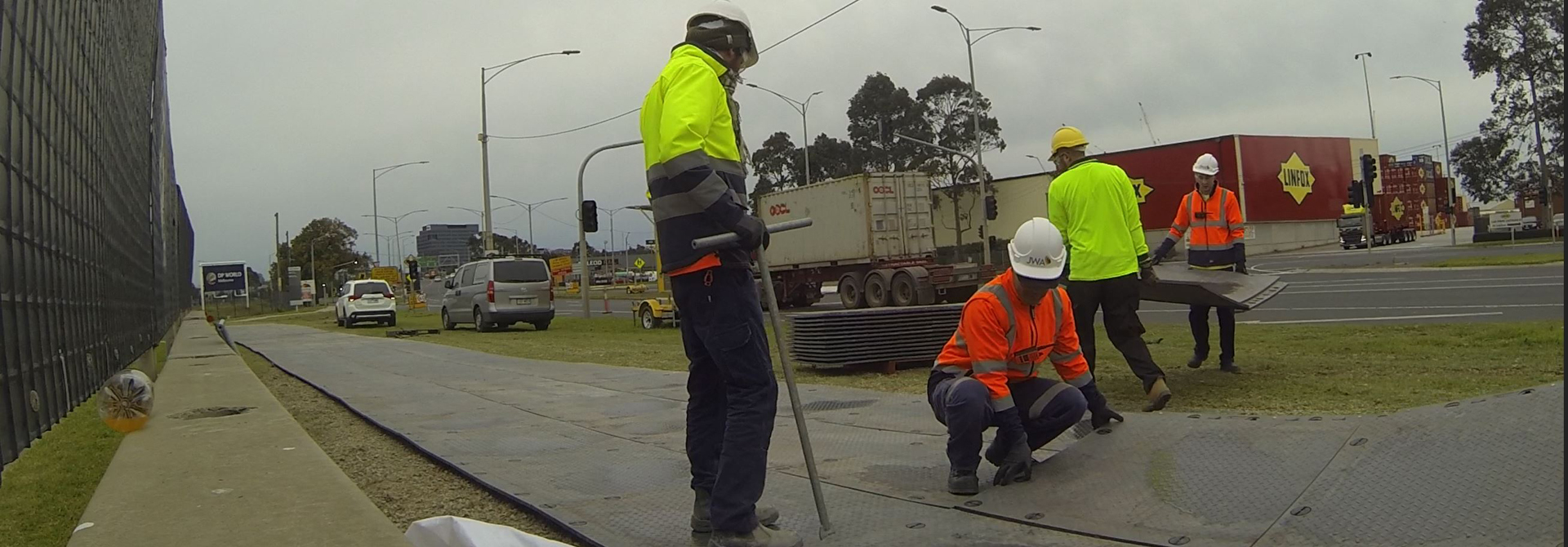
Man-portable systems can be installed and removed by hand in hours, keeping event schedules tight.

Technical Data

Material HDPE Composite (High-Density Polyethylene)
Load Capacity Up to 60+ Tons (configuration dependent)
Panel Dimensions Varies by system — contact JWA for sizing
Surface Anti-slip textured finish, suitable for pedestrian and vehicle use
Installation Manual or mechanical; minimal groundwork required
Reusability Multi-deployment rated; UV stabilised and weatherproof

Expert Insights

Event Load Planning

For large events, JWA models expected crowd movement patterns to determine walkway widths and junction configurations. High-density crowd areas require wider mat runs to prevent bottlenecks and ensure safe egress.

Wet Weather Preparation

Pre-event ground saturation significantly affects walkway stability on soft turf venues. JWA recommends installing walkways 24–48 hours before events where possible to allow the mat system to settle and stabilise before crowd arrival.

Proven Performance

Featured Case Studies

Real-world examples of how composite matting solves access challenges for pedestrian walkways projects.

Reservoir Station
Featured Project Reservoir, VIC

Reservoir Station

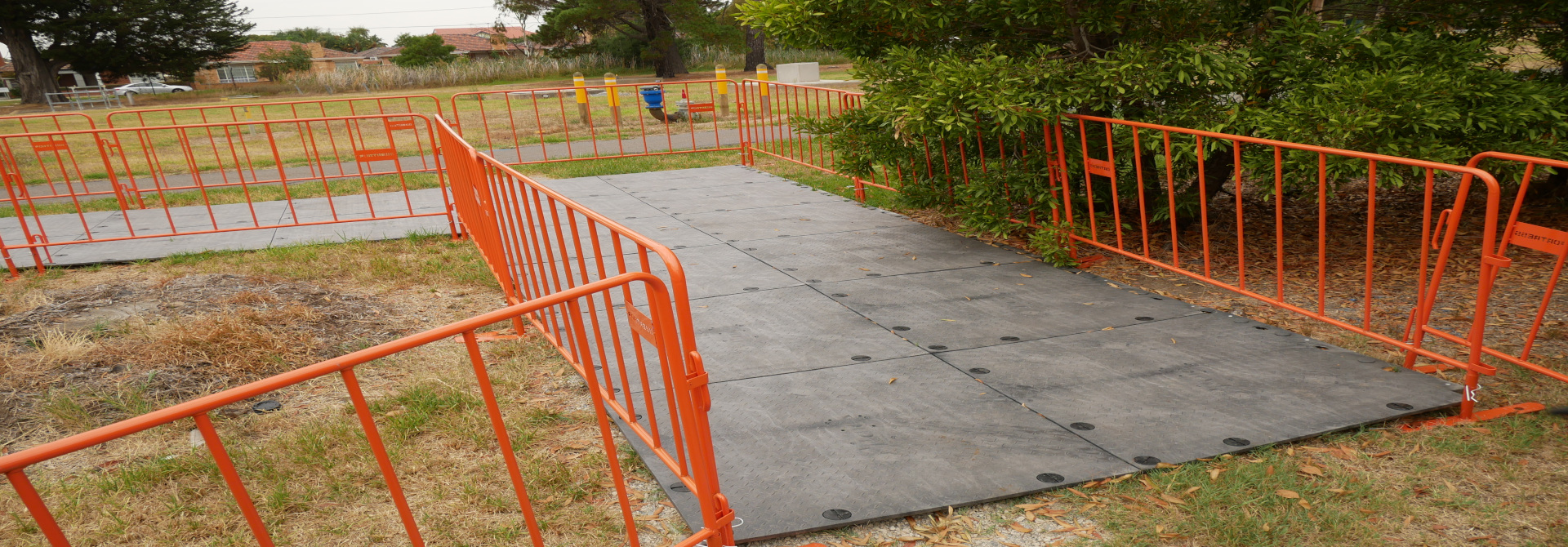
The construction team at the new Reservoir station in Melbourne required a clean and safe access solution for their site office, which housed over 50 staff. To prevent the office from becoming muddy and to protect the grounds from erosion, a temporary footpath was installed using man-portable, interlocking composite mats.

West Gate Tunnel Project — JWA project case study
building

West Melbourne, VIC

West Gate Tunnel Project

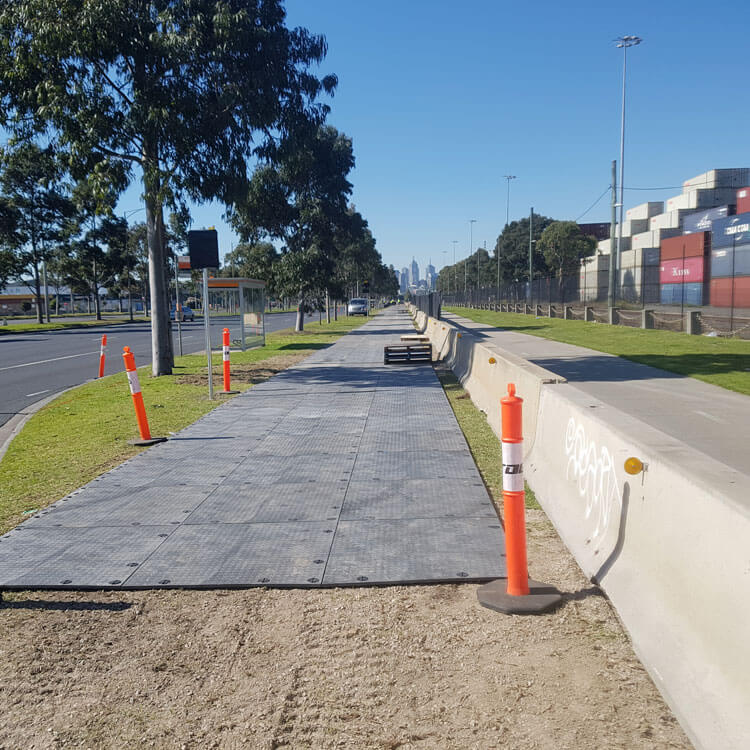
800m of light-duty composite matting was installed to be used as a temporary shared user pathway. This major infrastructure project required innovative solutions for maintaining public access during construction.

View Project
Commonwealth Games — JWA project case study
events

Gold Coast, QLD

Commonwealth Games

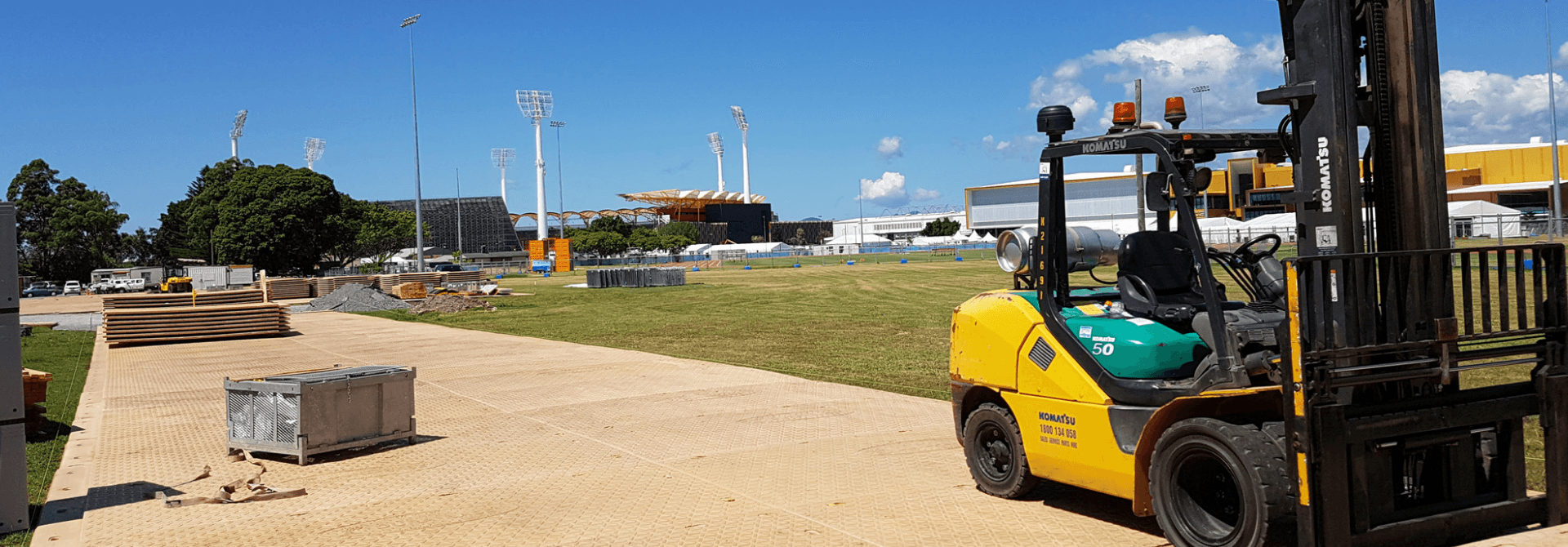
The opening ceremony for the 2018 Commonwealth Games premiered on the 4th of April at Carrara Stadium, Gold Coast and was in need of event matting. JWA provided comprehensive ground protection solutions for this world-class sporting event.

View Project
Naturform — JWA project case study
building

Clyde North, VIC

Naturform

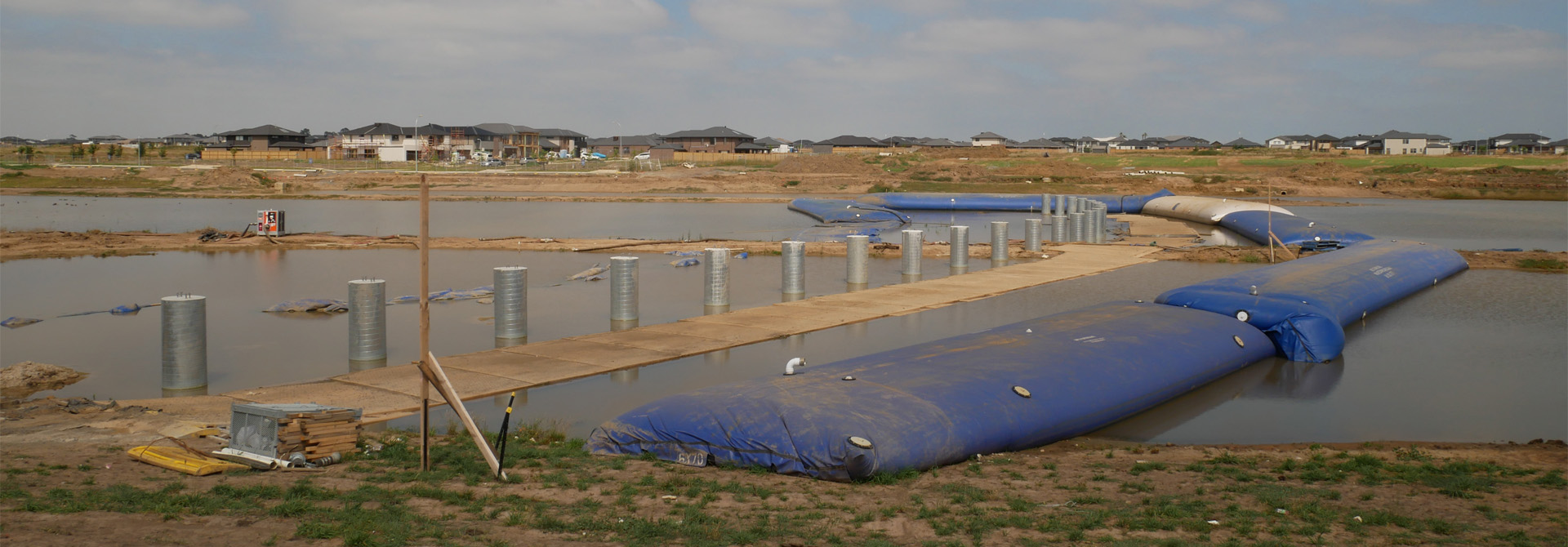
Naturform, a leader in urban landscape, was tasked with constructing a 167m boardwalk over a seasonal wetlands lake in a new housing development. Dura-Base mats were used to provide access to the marsh bed and create a stable platform for pouring concrete piers.

View Project

Ready to Start Your Project?

Trusted by Industry Leaders