
GEOTECHNICAL DRILLING

Access for investigation

Access for investigation
Solutions

The Challenge Geotechnical investigations require drilling in locations specifically characterised by poor ground conditions — the very terrain that makes equipment access and platform stability most difficult.

The Solution Composite mat platforms and access roads enable drill rigs to reach any investigation location safely, without compromising the sensitive ground being studied.

Key Challenges

What Makes Geotechnical Drilling Demanding

Ground Stability

Drill rigs require level, load-rated access in locations often characterised by poor natural ground.

  • Rig Instability
  • Access Failure

Environmental Protection

Drilling near waterways or sensitive soils risks contamination from spoil and drilling fluids.

  • Spoil Runoff
  • Fluid Contamination

Operational Efficiency

Mobilising drill rigs to difficult ground without proper access adds significant programme risk.

  • Mobilisation Risk
  • Schedule Overrun
Engineered Solutions

Performance Over
Unstable Ground

Deploy rapid access systems that protect the environment while supporting heavy loads.

Load Distribution

Engineered composite mats distribute weight effectively, preventing bogging and ground damage.

Rapid Deployment

Quick installation and removal means minimal downtime and maximum productivity.

All-Weather Access

Our systems provide reliable access in any weather conditions, keeping projects on schedule.

Reusable Systems

Durable construction allows for multiple deployments, reducing overall project costs.

Technical Data

Material HDPE Composite (High-Density Polyethylene)
Load Capacity Up to 60+ Tons (configuration dependent)
Panel Dimensions Varies by system — contact JWA for sizing
Surface Anti-slip textured finish, suitable for pedestrian and vehicle use
Installation Manual or mechanical; minimal groundwork required
Reusability Multi-deployment rated; UV stabilised and weatherproof

Expert Insights

Investigation Route Planning

JWA works with geotechnical engineers to plan access routes that minimise the total mat footprint while reaching all required borehole positions. This optimises mat quantities and reduces vegetation impact in sensitive investigation areas.

Spoil Management

Drill spoil and water from washing equipment must be managed away from the mat footprint to prevent surface contamination. JWA recommends spoil containment bunding integrated with the mat platform on all environmentally sensitive sites.

Proven Performance

Featured Case Studies

Real-world examples of how composite matting solves access challenges for geotechnical drilling projects.

Wheatstone
Featured Project Onslow, WA

Wheatstone

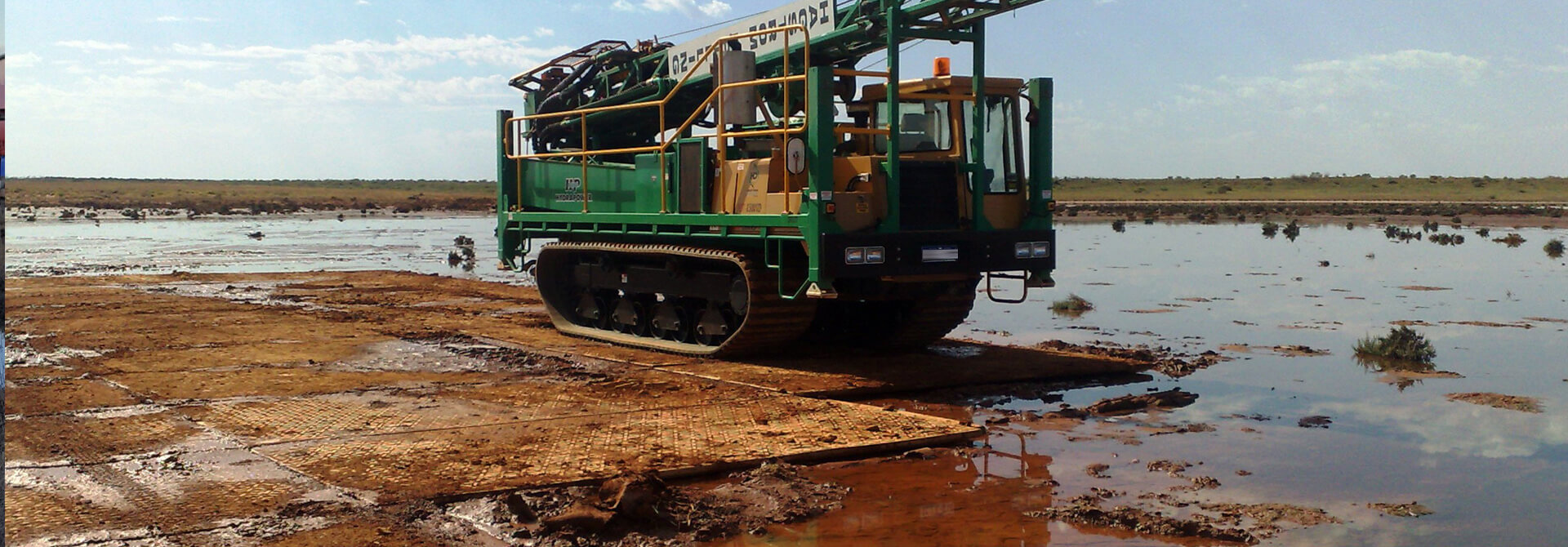
The Wheatstone project required geotechnical drilling operations over a period of 12 months. Dura-Base mats were essential for providing access to the site, as the soft ground conditions caused standard all-terrain vehicles to bog. Additionally, the mats protected heavy machinery from the corrosive acid sulphate soils present on site.

Australia Pacific LNG Project — JWA project case study
oil and gas

Multiple locations, QLD

Australia Pacific LNG Project

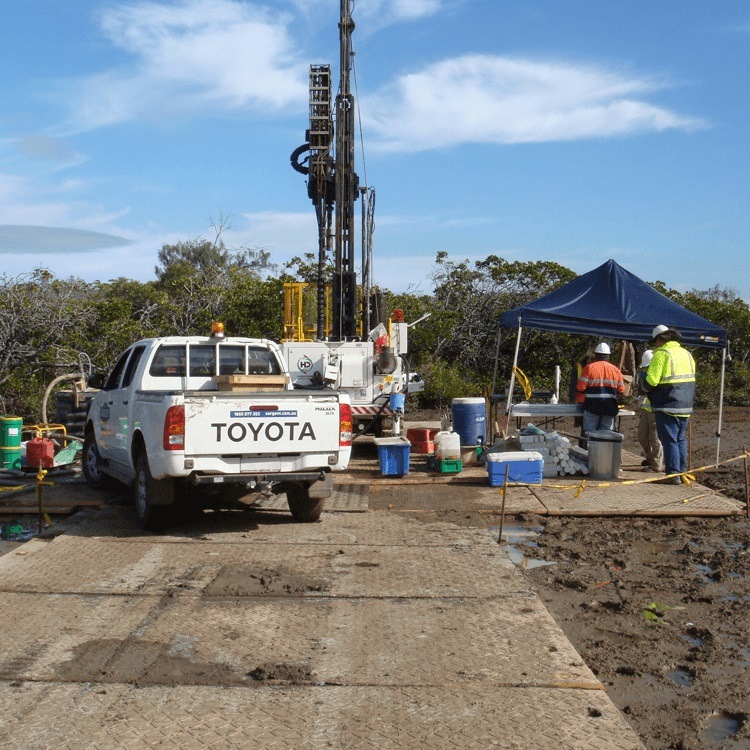
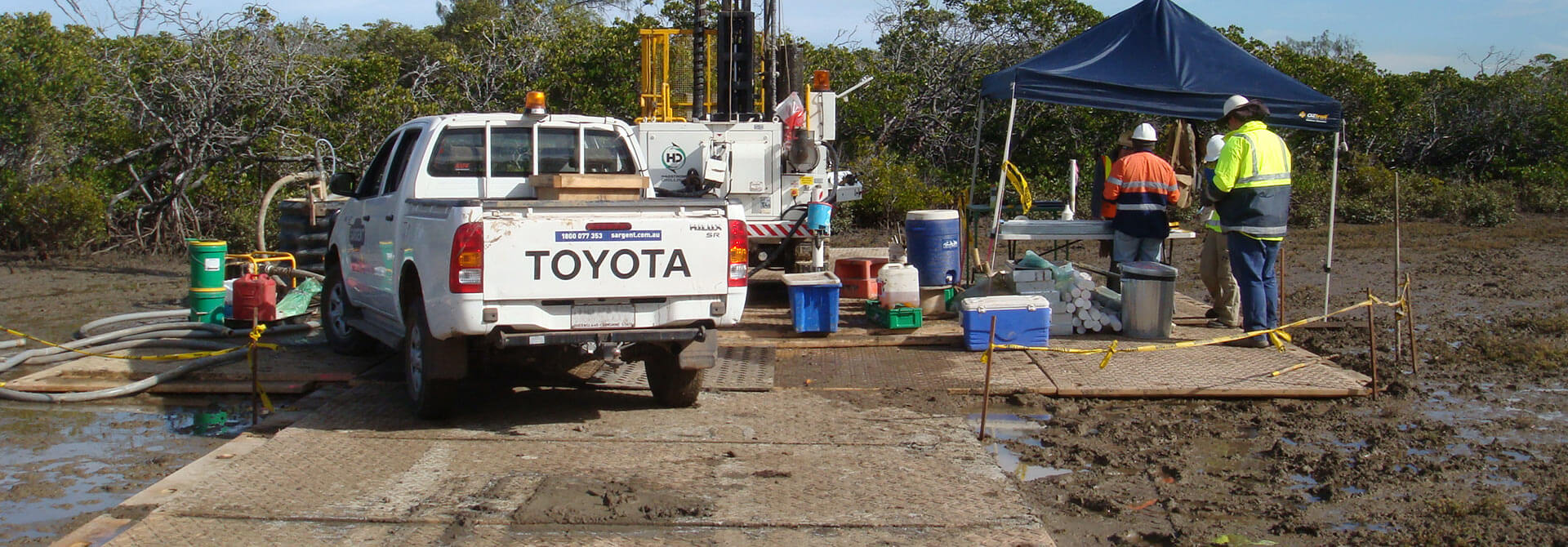
The Australia Pacific LNG Project faced 14 months of geotechnical investigations in extremely sloppy ground conditions with daily tidal fluctuations. Dura-Base mats created a firm platform for drilling rigs, enabling over 100 core penetration tests.

View Project

Ready to Start Your Project?

Trusted by Industry Leaders