
Barrow Island
Oil and Gas | Western Australia
Overview
How composite matting was used to support works at a Class A Nature Reserve. This environmentally sensitive project required the highest standards of ground protection.
Environmentally Sensitive Access at the Barrow Islands
When our client, a multinational energy corporation, required environmentally sensitive access within a Class A Nature Reserve, it was the world’s largest non-government facilitated quarantine management system. Rigid quarantine measures implemented on the island have assisted to safeguard natural fauna and biodiversity from the proliferation of non-native species. It hosts 235 square kilometers of secured habitat for a variety endangered animals and plants.
Over 50 years ago, oil was first discovered on the island, and since 1963, the island has produced over 300 million barrels worth. The company reached out to JWA with the purpose of providing beach access to cause minimal interference to the sea turtles of the island.
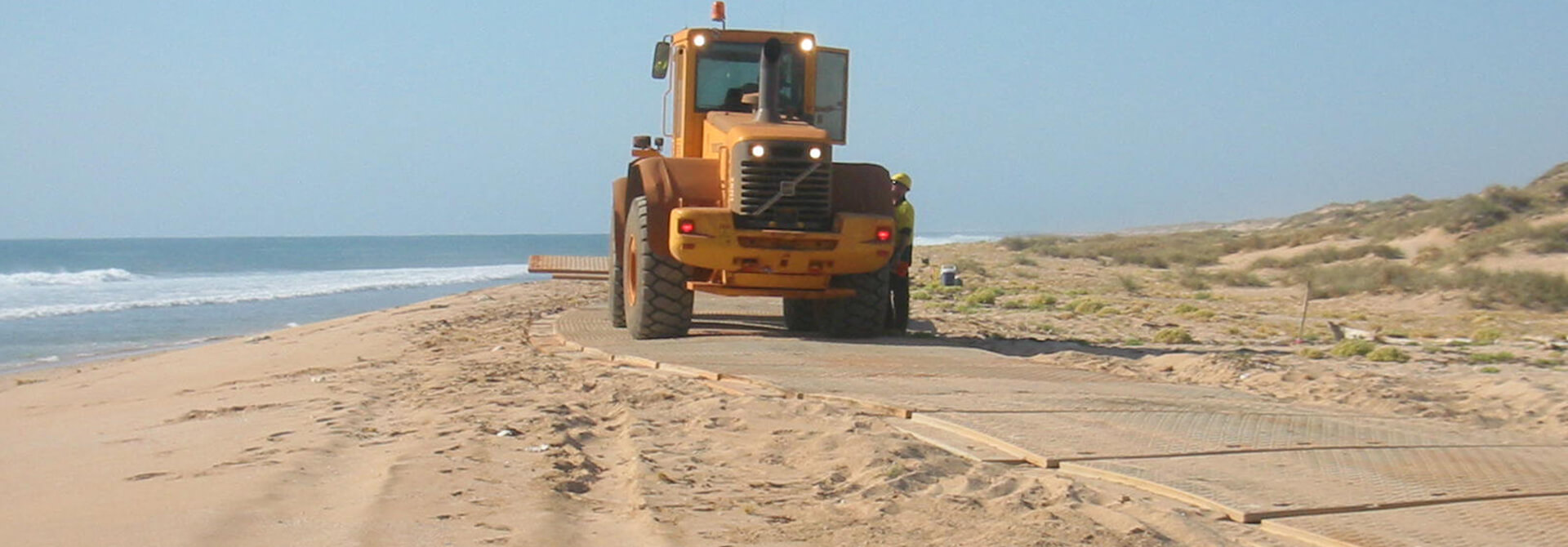
The known turtle breeding ground required beach access for heavy machinery. The requirement was to have minimal ground disturbance and be able to demob the moment a turtle was sighted offshore. Consequently, all machinery had to be turned off and all crew members had to wait until the turtles had left until construction could commence. Soft sand was also an issue as vehicles were unable to gain traction in the unstable terrain. This resulted in both the tired-vehicles and machinery subsiding into the ground, thereby causing delays and possible damage.
How Dura-Base Mats were used
The solution to the problem involved using Dura-Base mats to grant access to the beach. A non-invasive method that does not interfere with the turtles and provided the option to halt work at a moments notice. Once a turtle was sighted, the mats were quickly gathered and the site was restored to its original environment. Used as a solid continuous surface for vehicles to travel across, the robust mats are 105mm thick and can spread the load evenly.
Results
Resulting from this initiative, the works had minimal impact upon the breeding habitat of the endangered sea turtle population. No remediation was required and the only action needed to be was gathering the mats upon successful completion of the project.
Project Details
Key Benefits
Resource Conservation
- Zero imported materials to island
- All mats cleaned to quarantine standards
- Complete material recovery post-project
Emission Reduction
- Minimised equipment on island
- Reduced barge movements
Minimised Time On Site
- Project completed within environmental windows
- Efficient mat deployment reduced ground time
Soil Conservation
- Zero impact to endemic species habitat
- No introduction of foreign materials
- Complete site restoration achieved
Related Products
Gallery
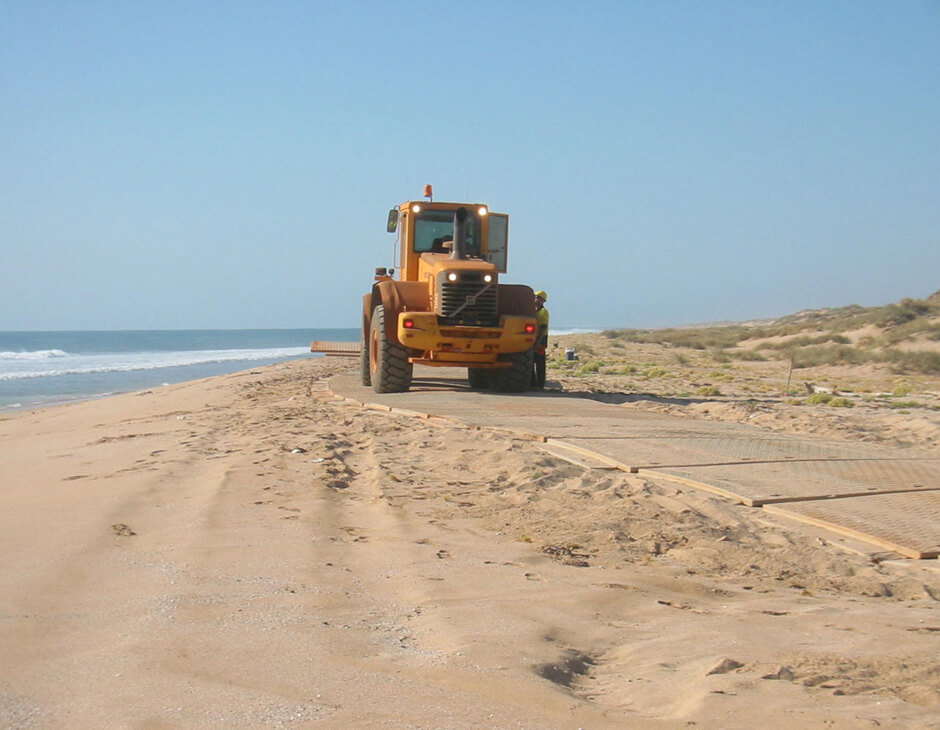
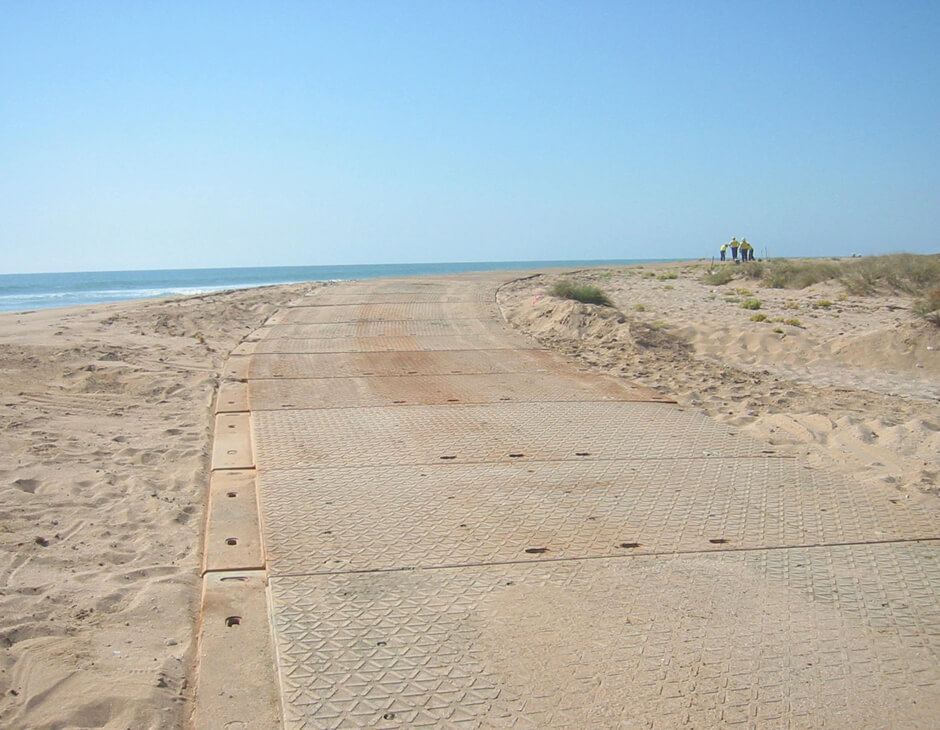
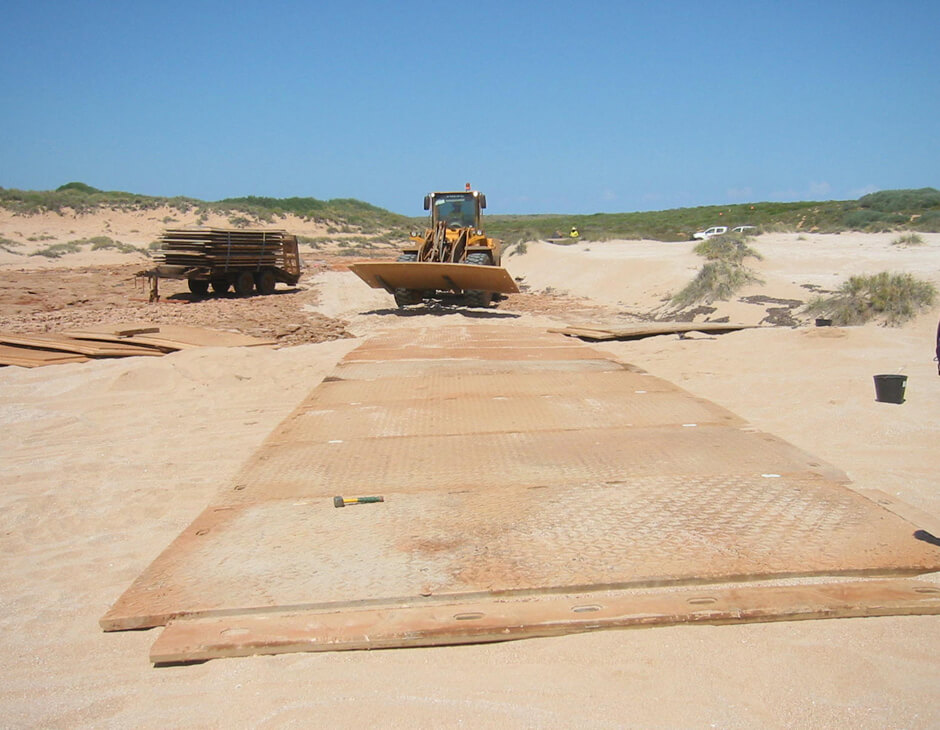
Temporary Beach Access in Class A Nature Reserve


Proven Performance
JWA's composite matting solutions have been trusted by industry leaders across Australia for over a decade.